Building Structure, Confidence, and Lifelong Reliability
German Shepherds are one of the most intelligent and capable dog breeds in the world. Known for their loyalty, work ethic, and versatility, they excel when training is approached with clarity, consistency, and purpose.
However, intelligence without structure can lead to frustration—for both dog and owner. German Shepherds require more than basic obedience commands. They need engagement, boundaries, and meaningful communication to thrive.
This guide outlines the core training fundamentals every German Shepherd should learn, focusing on behavior development, handler relationship, and responsible training methods that support long-term success.
Why Training Matters More for German Shepherds
German Shepherds are working dogs by design. Their minds are active, observant, and constantly processing their environment. Without training, that intelligence often redirects into:
- Excessive reactivity
- Guarding or over-alert behavior
- Destructive habits
- Anxiety or frustration
Training provides direction, not restriction. It gives the dog a job, builds confidence, and strengthens the bond between handler and dog.
Training Begins With Relationship, Not Tools
Effective German Shepherd training starts with trust and communication, not equipment.
Before introducing any tools, focus on:
- Consistent routines
- Clear expectations
- Calm leadership
- Positive reinforcement
A dog that understands why behaviors are rewarded learns faster than one trained through pressure alone.
Core Training Principles for German Shepherds
1️⃣ Consistency Builds Confidence
German Shepherds thrive on predictability. Commands, boundaries, and responses must remain consistent across all household members. Mixed signals slow learning and create anxiety.
2️⃣ Mental Engagement Is as Important as Physical Exercise
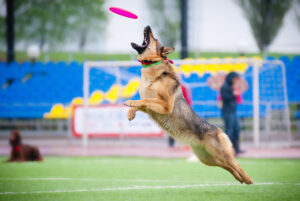
Training sessions should challenge the mind, not just the body. Short, focused sessions multiple times a day outperform long, repetitive drills.
3️⃣ Calm Leadership Outperforms Force
This breed responds best to confident, calm guidance. Harsh corrections often backfire, creating avoidance or defensive behavior rather than understanding.
Foundational Skills Every German Shepherd Should Learn
Name Recognition & Focus
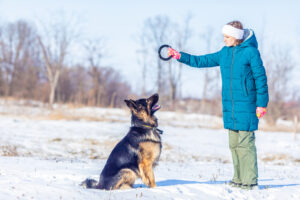
A German Shepherd should reliably respond to their name and offer eye contact. This skill becomes the foundation for recall, leash work, and impulse control.
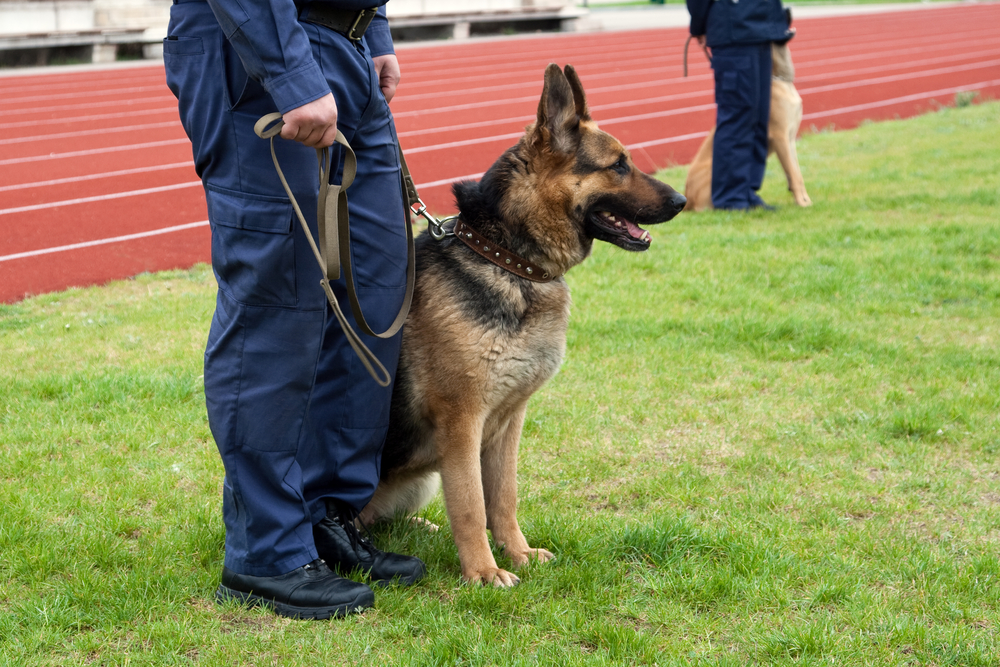
Leash Manners
Leash training is about communication, not restraint. Controlled walking teaches attention, emotional regulation, and environmental awareness.
Key goals include:
- Loose-leash walking
- Directional awareness
- Calm responses to distractions
Sit, Down, and Stay
These commands are not just obedience cues—they are impulse control exercises. They teach patience and emotional regulation in stimulating environments.
Recall (Come)
Reliable recall is essential for safety. It must be trained gradually, positively, and reinforced consistently across environments.
Understanding Training Tools (Support, Not Solutions)
Training tools should support communication, not replace training.
Common tools include:
- Flat collars for identification and everyday use
- Martingale collars for gentle leash guidance
- Harnesses for controlled walking
- Advanced tools (used only with professional guidance)
No tool trains a dog on its own. Results come from timing, consistency, and reinforcement—not equipment alone.
Training Stages: Puppy to Adult
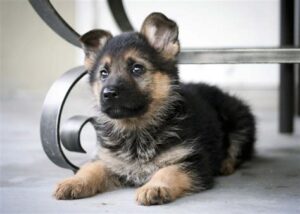
Puppy Training (8–16 Weeks)
Focus on:
- Name recognition
- Gentle handling
- Environmental exposure
- Calm behavior reinforcement
Adolescent Training (4–12 Months)
This stage tests boundaries. Reinforce structure, avoid overcorrection, and continue social exposure.
Adult Training
Training evolves into maintenance, refinement, and enrichment. Even adult German Shepherds benefit from continued learning and engagement.
Common Training Mistakes to Avoid
- Rushing advanced commands before foundations are solid
- Inconsistent rules across handlers
- Overcorrecting fear or confusion
- Neglecting mental stimulation
- Expecting maturity before training
Training is cumulative. Small gaps early become large issues later.
Training and Temperament Go Hand in Hand
Well-trained German Shepherds are:
- Emotionally stable
- Confident but controlled
- Reliable in public settings
- Adaptable to change
Training does not suppress personality—it channels it productively.
Final Thoughts
German Shepherd training is not about dominance or control. It is about partnership, clarity, and purpose.
When training is approached with patience, structure, and respect for the breed’s intelligence, German Shepherds become what they are meant to be: dependable companions, confident protectors, and deeply bonded family members.
📘 Continue Exploring German Shepherd Care & Development
→ Is the German Shepherd the Right Fit for You?
→ German Shepherd Temperament & Personality
→ Preparing Your Home for a German Shepherd Puppy
→ German Shepherd Exercise & Enrichment Needs
→ German Shepherd Health & Care Guide