German Shepherds are widely respected for their intelligence, loyalty, confidence, and versatility. Originally developed as working dogs, they are now commonly found as:
- family companions,
- service dogs,
- police dogs,
- military dogs,
- and protection dogs.
But what is the German Shepherd temperament really like in everyday life?
The answer depends heavily on:
- breeding,
- training,
- socialization,
- environment,
- and owner consistency.
When properly raised and trained, German Shepherds are often:
- loyal,
- highly intelligent,
- protective,
- affectionate with family,
- and eager to work.
This guide explains:
- German Shepherd personality traits,
- energy levels,
- behavior around families,
- training expectations,
- and what potential owners should realistically expect.
What Is the German Shepherd Temperament Like?
German Shepherds are commonly known for being:
- intelligent,
- loyal,
- confident,
- alert,
- and highly trainable.
They form strong bonds with their families and are often extremely devoted to their owners.
Unlike some breeds that are naturally social with everyone, German Shepherds are usually:
- more observant,
- more reserved with strangers,
- and naturally protective.
When properly socialized, this confidence can become one of the breed’s greatest strengths.
Are German Shepherds Good Family Dogs?
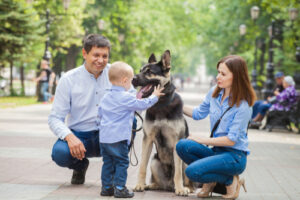
Yes — when properly trained and socialized, German Shepherds can be excellent family dogs.
They are often:
- affectionate with family members,
- loyal,
- protective,
- and highly engaged with their households.
Many owners appreciate how connected German Shepherds become to their families.
However, they usually do best with owners who can provide:
- structure,
- leadership,
- exercise,
- and consistent training.
Protective Instincts
One of the defining traits of the German Shepherd temperament is:
natural protectiveness.
German Shepherds are naturally observant and often highly aware of their surroundings.
This does NOT automatically mean aggression.
Properly bred and socialized German Shepherds should ideally be:
- confident,
- stable,
- calm,
- and controlled.
Good training and socialization are extremely important to channel protective instincts appropriately.
Intelligence & Trainability
German Shepherds are considered one of the most intelligent dog breeds in the world.
They excel in:
- obedience,
- advanced training,
- working roles,
- and problem-solving tasks.
Because of their intelligence, they often learn commands quickly.
However, intelligence also means they require:
- mental stimulation,
- structure,
- and regular engagement.
Without enough stimulation, German Shepherds may develop:
- boredom,
- destructive behavior,
- or anxiety.
➡ Related Reading:
Puppy Training Timeline
Energy Levels & Exercise Needs
German Shepherds are:
high-energy dogs.
They generally require:
- daily exercise,
- structured activity,
- training sessions,
- and mental stimulation.
Helpful activities may include:
- walks,
- obedience work,
- puzzle toys,
- fetch,
- agility,
- and advanced training.
Without proper activity, many German Shepherds may become:
- restless,
- hyperactive,
- or destructive.
➡ Related Reading:
How Much Exercise Does Your Dog Really Need?
Socialization Matters
Socialization is extremely important for German Shepherd development.
Positive exposure to:
- people,
- environments,
- sounds,
- surfaces,
- and experiences
helps puppies become: - confident,
- calm,
- and adaptable.
Poor socialization may contribute to:
- fearfulness,
- anxiety,
- overprotectiveness,
- or behavioral problems.
Early socialization should begin during puppyhood.
➡ Related Reading:
German Shepherd Puppy Checklist
German Shepherds Around Children
Well-trained and properly socialized German Shepherds can do very well with children.
Many become:
- loyal family companions,
- attentive protectors,
- and highly bonded household dogs.
However, because of their:
- size,
- strength,
- and energy,
supervision around young children is always important.
Teaching children respectful interaction is equally important.
Are German Shepherds Aggressive?
German Shepherds are often misunderstood because of their protective nature.
Properly bred and socialized German Shepherds should ideally be:
- stable,
- confident,
- controlled,
- and trainable.
Aggression is more commonly linked to:
- poor breeding,
- lack of training,
- fear,
- neglect,
- or inadequate socialization.
Responsible ownership plays a major role in shaping behavior.
Apartment Living & Lifestyle Compatibility
German Shepherds can adapt to apartment living in some situations, but they generally do best with:
- sufficient exercise,
- mental stimulation,
- structure,
- and outdoor activity.
Owners with active lifestyles often pair well with the breed.
➡ Related Reading:
Traveling With Your Dog: Complete Beginner Guide
Best Products for German Shepherd Owners
Helpful products for German Shepherd owners may include:
- durable harnesses,
- orthopedic beds,
- enrichment toys,
- slow feeder bowls,
- grooming tools,
- and training equipment.
Recommended Product:
Tactical Dog Harness for German Shepherds
A durable harness designed for active large-breed dogs.
👉 View Tactical Dog Harnesses on Amazon
Recommended Product:
KONG Extreme Dog Toy
A strong enrichment toy designed for powerful chewers.
👉 Shop Durable Dog Toys on Amazon
➡ Explore More Products:
All Breeds Dog Store
Why German Shepherds Remain So Popular
German Shepherds continue to be one of the world’s most respected breeds because they combine:
- intelligence,
- versatility,
- loyalty,
- confidence,
- and trainability.
When properly bred, trained, and socialized, they can excel as:
- family companions,
- working dogs,
- service dogs,
- and highly devoted partners.
Final Thoughts
The German Shepherd temperament is best described as intelligent, loyal, observant, and highly trainable. These dogs thrive when owners provide structure, leadership, exercise, and consistent socialization.
While German Shepherds may not be the ideal breed for every household, they can become extraordinary companions for owners prepared to meet their physical and mental needs.
With proper care and responsible ownership, German Shepherds often develop into confident, stable, and deeply devoted family dogs.